Bob turned a passion for collecting into a way of life. Among his many collections were objects of interest, histories of humans and the natural world, soup recipes, resources for local non-profits, and warm, lasting relationships.
He was working on a book that would help people navigate collections they inherit from their family. Inspired by his interests and teachings, those who love him are curating photos and stories about Bob to build this memorial exhibit. If you would like to contribute, use the "Add Your Story" button at the top of the page. Bob's collection of family & friends would love to read your memories!
Please share this link with people who remember Bob. This website will remain available until July 2027. Let's see how extensive and inclusive we can make it.
Marianne Pickering
My first night with Bob Pickering was filled with anticipation, passion and fun.
“A Night in the Field” was advertised in Chicago, January 1983.
Camp out inside the Field Museum.
Let museum staff introduce you to the Wonders of the World!
Snacks & breakfast included.
Ages 9 -10
Saturday 6:30pm to Sunday 9am
Members $22 Non-members $25
Over twenty years before “Night at the Museum” thrilled moviegoers, a plucky team of Education department programming staff came up with an unconventional idea. A sleepover in the hallowed exhibit halls of one of the largest and most respected Natural History museums in the world.
At the time, I was developing educational programs for families. Bob oversaw non-credit adult classes & workshops. We were both part of a carpool that traveled scenic Lake Shore Drive to and from work. I knew Bob, but I didn’t really know him.
To be honest, most of us (including myself), pursued this idea with vigor because WE wanted to sleep over in the museum. The participating kids were the vehicle and, as turned out, a welcome bonus. After months of negotiating with The Field’s Administration and Security, we got approval and put out a quiet call for “helpers.” Bob was one of the first to respond, “I’m in!”
If you are unfamiliar with 9- and 10-year-old children, they are physically strong by size and have notable endurance. They may show early signs of puberty, both physically and emotionally. They begin to think more abstractly and can follow a timeline. They desire more autonomy and may resist adult direction. They are more likely to be influenced by peers. They may struggle to focus on tasks that are not self-selected.
As families arrived to deliver their children, we recognized these childhood attributes and those of their parents. Some parents were dressed for a night-on-the-town and quickly dropped their child, pajamas & sleeping bag at the curb. Others lingered, giving their child detailed descriptions of the night’s activities and instructions on expected behaviors. For some kids, this would be their first night away from family. For others, they were ready to rock n roll!
Note: Field Museum still offers an overnight experience called “Dozin’ with the Dinos.” Wisely, they have adapted it to families and parents must attend.
For the initial offering, we limited the group size to 30. Six staff members were responsible for five children each. We would sleep with our 5, go to the bathroom with our 5 and “explore” with our 5. While the second two activities happened with frequency, I’m not sure anyone slept. I was busily engaged with five charming girls, but could also observe Bob with five active boys. Bob listened to each of them with kindness and attention. Flashlights in hand, he took them to visit the Ancient Egypt exhibit. In addition to the thrill of mummies at night, Bob asked the kids thoughtful questions and shared age-appropriate information about archaeology and burial practices. He told them corny jokes and laughed at theirs. He comforted a boy who had wet his sleeping bag and seamlessly solved the problem so others wouldn’t notice. He took the boys upstairs to observe the bones of dinosaurs, modern mammals and birds. He introduced Japanese samurai culture and the importance of biodiversity. His passions became theirs. Bob had many research interests, and with over 480,000 square feet of exhibit space, there was a lot to explore! After a very long night, Bob bundled up his 5 and took them to the roof to view the Chicago skyline and sunrise on Lake Michigan. By breakfast, he and the boys had become a family.
After A Night in the Field, I looked differently at Bob. I think I fell in love with him that night. Seeing him in action prepared me to embrace his charm, humor, genuine kindness and intellect. Bob found interest in everything and everyone, including me. When we married the following year, Bob told me, “We may never be rich, but we will never be bored.” Bob always kept his promises.
Evie Pickering
In an early anthropology class, I was introduced to the term altruism—a concept that is often hard to illustrate. Within anthropology, altruism is understood as culturally patterned behaviors and social practices that prioritize the welfare of others over the self, executed without expectation of material reward. In our house, this was how my dad expressed his love. He would wake up every morning to make my mom coffee, despite not being a coffee drinker himself. He would slice a banana into rounds and carefully place a dollop of peanut butter on each one, because that is how I liked it. I never scraped a windshield until after moving from Wyoming to Arizona, because he would scrape mine every morning before he went to work, so I wouldn’t have to before driving to high school. These examples cannot illustrate the depth of his love, but they do demonstrate the ways in which he made daily choices to prioritize the comfort and happiness of others. I know his ethos of selfless and consistent care extended beyond the walls of our home. He was a dedicated, decades-long blood donor—never needing any in return. His proudest professional accomplishments were not moments where he was in the spotlight, but rather those where he was able to champion others in ways he knew they deserved.
I cannot distill my lifetime of memories into a single story, but there is a throughline. He was a teacher and a listener, observant and endlessly curious; characteristics that enabled him to find meaningful ways to attend to others. Anthropologists study altruism to better understand kinship, community ties, and reciprocity. I am the person I am because of his unconditional love. Actions that were normalized as a child but lessons as an adult. In recent weeks, I have further witnessed the impact of his altruism. Only hearts so full can feel so broken. I raise a cup of Earl Grey in one hand and a glass of scotch in the other to cheers as we carry on and share his traditions.
Kate (Pickering) Berry
In every office of his I remember, and probably you do, too, Dad had a cross-stitch that read, "In Dirt, there is Truth." His decades of work in archaeology and anthropology imbued the ground with both a sense of possibility-what might be in there?- and familiarity. Many of my memories are of him digging in the dirt, though more often as a gardener, with my sister, Evie and I, collecting bugs or catching reptiles nearby. Wherever we lived, often in places far less verdant than his childhood southern Illinois, Dad grew tomatoes, tomatillos, peppers, and anything else that might take root and taste good.
As a gardener and a researcher, Dad payed careful attention to the world under his feet. On hikes, he frequently found fossils, cool minerals, or even human-made objects the rest of us stepped over without noticing. He was also infuriatingly good at finding money on the street and remains the only person I've met who has found more than one 20 dollar bill.
Dad knew how to observe the world around him in a way that uncovered treasures and created meaning. This power of observation, really a combination of various skills, experience, and temperament, made him such a good teacher, father, and person. He was occasionally forgetful about dates and he probably wouldn't clock a new haircut, but he was watchful and perceptive and helped the people around him learn to notice small, important things as well. He noticed and nurtured and brought out what was true and interesting about the world and people around him, this was especially true for his daughters. He not only taught me to look at the ground, he is the ground which grew me.
Phoebe Stubblefield
Bob, Angela, Jen the grad student and I were in the lab cleaning and organizing the bones from one of the recovered individuals [1921 Tulsa Race Massacre Investigation]. The lab was in a shiny new trailer positioned on the north edge of the cemetery. We had been working since morning. Sometime in the early afternoon Bob said, “I’m tired.” He was speaking to the room, and we acknowledged that it was after lunch, a generally sleepy time. The room wasn’t hot because we had air conditioning, so it had to be the meal. Later Bob said it again, and he clearly wasn’t expecting an answer. I got to thinking that Bob had mentioned being tired at least twice, yet we hadn’t done anything exertive, and he wasn’t acting tired, he didn’t pause working, nor was he addressing anyone when he said it, just the room. My brain clicked and I said, “We’re going for a walk. Open all the windows and let’s go, we need to de-gas this new trailer and get some air!” We went on a cemetery tour, me guiding us through locating the marked graves from the sections bordering the corners of colored potter’s field, and Bob commenting on the Woodmen, Mason, and Oddfellow markers. Thereafter we opened the windows every morning, and we didn’t have any repeats of afternoon weariness.
Bob would invite us to go to Nothing’s Left, a microbrewery, after we finished for the day. I appreciated the window into afterwork culture, something I didn’t experience on the usual. We would meet Mari there and talk about anything, life in Tulsa, events happening, school getting ready to start, the TU library, meeting at the flea market, whatever. Those evening meetings were a gentle way to end the day, and I appreciate Bob introducing them to me.
Justin Williams
I have so many wonderful memories of my dear friend, Bob Pickering, that it is hard to just write about one, or maybe two, but here goes.
Our trip to Egypt was wonderful. Cindy and I spent 15 days with Bob and Marianne and traveled from one end of the Nile to the other, stopping at all the fascinating places in between that we had only seen on TV and dreamed of visiting in person. One particular stop was in Aswan. We were staying in an excellent hotel on the river and had been celebrating our tour guides, a delightful fellow named Aboudy’s birthday. The five of us, Aboudy, Bob, Marianne, my wife Cindy and me, were on the elevator heading down to the 1st floor. The elevator had only gone down one floor when it stopped and the doors opened. In walked a belly dancer, a very, very skimpily dressed belly dancer I might add. She was looking at her phone and just walked straight in. I also would like to add that she was extremely well endowed, if you catch my drift. Now what made this event all the more memorable, was that her entrance caught all of us off guard, especially Aboudy. You see, he was about 5’6” maybe 5’ 8”. Either way, it put him about eyelevel to her “endowment”. Everybody’s eyes went wide open I almost said holy s*#t out loud. That’s when I looked over at Bob. He had the same holy s*#t look on his face that I had and then displayed a sheepish grin of his that said, “We will remember this moment and talk about it forever.” The embarrassment turned into awkwardness, then everyone, including the belly dancer, were giggling and laughing. You were absolutely right, my friend, it will be remembered and talked about forever.
Bob liked to fish. Marianne had bought Bob a guided fishing package for his birthday one year and he had asked me to join him. We had a very knowledgeable and accomplished guide and through his expertise, caught a lot of stripers up on Skiatook Lake. Of course, Bob caught more than I did. He also enjoyed traveling over to Cushing with me to our family farm for a day of pond farm fishing with an occasional period of target practice with whatever firearm we happened to bring that day. Bob’s catch phrase, which I can still hear and will always remember, “What great fun” always ended our trips.
Dorothy (Thompson) Fish
Bob and I went to high school together and attended church and the same youth group together. One summer when we were about 14 years old, our youth group went on a weekend summer trip to Cumberland Falls in Kentucky. We all camped out in tents. Every time Bob had to go to the restroom, he would say he was going to see a horse about a blanket. It was funny then. Bob was always a nice person. We had a lot of fun in our church youth group.
Alexander Bratton
I am lucky to be able to call Bob a teacher, a provider, and a friend. I still remember when I had one of my first snow days and my driveway was covered in snow. I saw what a great job Bob did with his driveway and clearing it, so I felt I should do the same. Bob saw me outside shoveling snow and came over and gave me some tricks of the trade that he had picked up throughout his life. Another time, when I was sick with COVID, Bob brought some gazpacho to my back door and left it there for me. That cold gazpacho was exactly what I needed when I was struggling in a new town, away from all my family, and sick with COVID. When it comes to being a great friend, there are too many stories, but one I'll never forget is when I came upon some ground venison. I reached out to Bob about cooking something up with it, and he mentioned he had a great recipe for some venison chili. We enjoyed some warm venison chili on a cold Sunday in January. I'll always remember Bob as one of the kindest friends I've ever had.
Zachary Qualls
Let me tell you about the time Bob changed my life.
As a younger man, I was working hard, hustling to make ends meet, yet convinced there was something more waiting for me. I will always remember the first time I spoke with Bob. I was sitting on the phone in the muggy courtyard of the Mabee-Gerrer Museum of Art. He convinced me to come to Tulsa for a campus and museum visit. Even though I had already accepted an invitation from another school, I decided to go.
The rest, as they say, is history.
That visit set in motion a new life. Not long afterward, I received an unexpected call from Diana Folsom, facilitated by Bob, offering me the opportunity to begin work at Gilcrease Museum almost immediately. That position led to an assistantship that carried me through my first graduate degree and established roots in Tulsa that would shape the next chapter of my life.
After earning that degree with Bob as my advisor and spending the next year working for Lisa Rebori, another of his long-term friends, at the Houston Museum of Natural Science, I found myself seeking his guidance yet again. During that call, he agreed to chair my PhD in Anthropology at the University of Tulsa. More than anything over the next few years, he taught me that intellectual curiosity was something to be embraced rather than narrowed, and he instilled in me a deep appreciation for the power of anthropology to connect people, stories, and ideas.
Over the years, our relationship evolved. What began as advisor and student, mentor and mentee, gradually became a friendship. Bob became someone I could call whenever I needed advice, guidance, or simply reassurance. I will always cherish the hours we spent with our office doors open across from one another in Harwell Hall, talking through life's challenges and him sharing practical wisdom.
As the years passed, Bob became part of my chosen family in Tulsa. He welcomed me into his home, whether that meant caring for the family pets while they were away or joining them for dinner around the table. His generosity made Tulsa feel less like a place I had moved to and more like home.
I am profoundly grateful to have known Bob and to have called him my friend. It is difficult to fully explain what Bob meant to me during a period when I was taking enormous risks and building a life from what felt like the start. Somehow, he made those risks feel manageable. He made it seem acceptable to dream bigger than I thought I could.
Bob was one of those rare people who changed lives not with grand gestures, but with quiet belief. Looking back after twelve years, I see just how much grew from that conversation in the museum courtyard: a new beginning in Tulsa, two graduate degrees, including a PhD, meeting my partner Robert that has now spanned ten years, countless friendships that became family, meaningful conversations, heartaches and triumphs, more Thai meals with Bob than I can remember, and enough stories to last a lifetime. None of those things would have unfolded in quite the same way without the man who was voted "Nicest Guy" in his high school class, the man who took a chance on an ambitious young person with an unconventional dream and, by believing in me, helped change the course of my life.
Thank you and I love you.
Richard Hoe
Not Robert. Bob. At board meetings, jokingly, I sometimes called him Bison Bob. Before he came to Tulsa, he was Deputy Director of the Buffalo Bill Historical Center, now called the Buffalo Bill Center of the West, in Cody Wyoming, and simultaneously the director of the Cody Institute for Western American Studies. And the Bison Bob moniker worked too because he loved Oklahoma’s Tallgrass Prairie Preserve and its bison herd, now roughly 2,500 strong.
After working at Buffalo Bill, he came here as curator and administrator at the Gilcrease Museum. Bob’s work as senior curator at Gilcrease stemmed from the partnership between the City of Tulsa and the University of Tulsa to jointly manage the Gilcrease art collections. He went on to create and direct Tulsa University’s Museum Science and Management (MSM) graduate program and then left Gilcrease to join the faculty as a professor of anthropology.
Anthropology? How about forensic anthropology? One of Bob’s forensic anthropology books was featured on an episode of the TV show, CSI. Yes, Dr. Robert B. Pickering’s” The Use of Forensic Anthropology,” co-authored with David Bachman, was featured as a reference for the show’s forensic team.
Bob was one of three anthropologists sent to Thailand by the U.S. Army to recover and identify soldiers killed during the Vietnam war. He was the last physical anthropologist in Thailand—the program transitioned during Bob’s service from Thailand to Hawaii.
We had lunch together two months ago. He said that he and Mari (his wife’s Bob-only nickname—the rest of the world called her Marianne) loved a Thai restaurant and he recommended it. I mentioned that Thai restaurants often included a spice I’m allergic to, and we wound up at a nearby hamburger joint. As it happens, the hamburger restaurant is called Ty’s, and so, in a sense, Bob got us to a Ty restaurant, anyway.
Bob and Marianne were members of our family. We spent countless holidays together, name the holiday: Christmas, Thanksgiving, Independence Day and more, sharing book ideas, corny jokes and love and respect. Last year, he said to my wife Lynne, after borrowing a stepstool to help with this or that, after practically tripping over it next to the fridge and scratching his head about where he found it, after he finished the job, “Let me put this back where it should go.”
Lynne responded drily: “It goes next to the fridge, Bob, where you almost tripped over it.”
He tried to retire a few years ago, but before you could say “Bob’s your uncle,” he became Dean of the Library at TU, a job he clearly loved. TU administration, Starship Technologies and Bob, during his tenure as Dean of TU’s McFarlin Library, installed an enormously popular Starbuck’s on campus, in the library, and introduced robotic coffee delivery. Visit TU’s McFarlin Library today, and, on the way in, you’ll see delivery robots whizzing about, coming and going from the library’s Starbucks, delivering coffee and food to students and staff all over the campus.
I could write more about Bob’s accomplishments—I didn’t mention until now his latest book, “Luck is a Fortune,” a historical epic about two mismatched soldiers, both assigned to Fort Gibson, Oklahoma in 1841. But I could go on with Bob’s accomplishments and fill more pages.
The main and most important thing is that he and Marianne loved each other and together built a wonderful family with daughters Evie and Kate, one that now includes greatly loved grandchildren. And from meeting Bob’s students here and there, I can tell you that he helped them enormously—I could always feel the love and respect radiating back and forth. Bob made you know that he was 100 percent interested in you!
Bob!
Tony Pfeiffer
A Dearest Friend
Bob and I met 1979 and immediately bonded over loss and pain. He had divorced and I had just separated from my wife and child. Bob kept it mostly inside while I acted out, so we complimented each other nicely. He was a grad student at the time and one of my all-time best teacher hires. We both admired another teacher, Don McVicker, who seemed to inflate with energy when he walked into a large lecture hall.
I started running as part of quitting smoking, and Bob decided to join me along with an accomplished runner friend of his. Bob had not been training. His friend suggested we try a six minute 30 second mile pace for a bit. Bob and I both strained. This was 1982 or so and I don’t think Bob ever recovered from overdoing it this once—-stubborn and determined fellow he was!
When I left Field Museum, Bob slid seamlessly into my role. We kept in touch over the years. He was wonderfully eclectic and accomplished. There was seemingly no discipline he hadn’t touched. We eventually bonded further over an interest in Japanese swords. I moved to Denver to take a job. He recommended me, although he warned me that it wouldn’t be like the good old days. Sure enough, one fine day he, anthropology department head, the head of zoology, and I stood in the museum parking lot, debating who would be first to leave its employ.
Bob went to take a job in Cody, a step up. I asked him once what is like to be vice president after being department head. He hesitated quite a bit and finally answered, "The view is different." I often quoted that lesson in bureaucracy and middle management. Bob had balance and perspective another time on a visit to Cody. We ended up at some high mucky muck‘s ranch. The guy made some critical remark about things where Bob worked. Bob just smiled and said la la la la and put his fingers to his ears as if not to hear.
Conversations with Bob were really a deep pleasure. We discussed everything: Always our children. He was very proud and loving of them both. Our last conversation ended with us agreeing to be in touch more often. Alas.
To die with unfinished business is to have led a rich life. May we all be so fortunate. As for me, even this brief remembrance fills me with gratitude for having known him. Celebration and sorrow will always go hand-in-hand and reaching for the phone will never be the same.
Cindy Williams
Bob was my boss when I worked at the Zarrow Art Center. I realized he was fair, kind and incredibly smart right away. Zarrow was a hybrid art center owned by the University of Tulsa and managed by Gilcrease Museum. I had just come from Philbrook Museum, so Bob and I were both museum people. Zarrow was always caught between TU politics and museum ethics. We had a huge meeting with TU staff once over rules for the gallery space at Zarrow. Bob had been out of town and had just gotten back a few hours before the meeting. Not knowing anything about the problem he showed up to the meeting at the last minute and had my back through the entire meeting. Had he not been there I would have definitely had a tough time explaining my position. That’s when I realized how great it was to have a boss who supported his staff like that. I am extremely grateful to have had the opportunity to work with him during my years at Gilcrease. My husband and I are so blessed to have had Bob in our lives as our close friend and traveling companion. We will always cherish our time together and laughter we shared.
David Bachman
We were friends and my respect for him was total. I enjoyed working with him over a long time and on several different things. I became involved with Bob when we were both members of the Colorado Coroners Association and we discovered we had both been working in Chicago at prior times. And then I moved to Denver from Ouray County and worked with him at the Denver Museum as a volunteer. He taught me pretty much all I know about forensic anthropology.
Virginia Berland
Bob Pickering had an impressive academic resume, though never quite same-ole-stuff... or boring.
He had an instinctive sense for survival and exaltation through the ordinary exigencies of ordinary people... living and dead.
He successfully "practiced" anthropology and archeology amongst academics, cowboys, and Oklahoma Baptists …..and digging the “long since dead” in southern Illinois.
He enriched the academic archive, but also demonstrated that academic success does not diminish obligation, grace and imagination... and joy … and laughter.
Bob had a great laugh, punctuated by a twinkle…..
It is the responsibility of his multitudinous and varied “survivors” to make sure future generations know about, and practice, and forward, the “twinkle.”
THAT is his legacy.
Sheila Moore
The first time I met Bob, my first cousin, he was a happy nine-month-old baby who patiently allowed me and my eight-year-old inexperience to carry him around as if he were a slightly perplexed doll. His mother, Aunt Virginia, and her sister, Aunt Kate, were two of my favorite aunts even though we lived so far away that we hardly ever got to see them, so we corresponded by mail.
A few years ago, Bob and Mari were in San Antonio on vacation, and we were able to touch base and catch up on family news from my dad's side of the family. I showed him the arrowheads our grandfather had found while plowing and had stored away for untold years in his toolboxes. I treasure them as if they were heirlooms handed down. They remind me of the terribly hard work our grandparents endured all their lives, and it somehow brings me closer to them. What is it that makes some people like Bob and others want to hold in their hands remnants from the distant past and wonder about the hands that fashioned those primitive tools and the lives they lived? To realize we are each just a infinitesimal drop of sand in this forever world?
We showed Bob and Mari around our small acreage in in the hills above San Antonio, and I showed him the arrowheads I had found in the yard and on the banks of the Blanco River. He gave me an archeology lesson about what kind they were. Some of the larger ones, he said, were blanks that the Indians had chipped here on this caliche and flint hill to use for trade with the other Indian tribes.
He related how our Aunt Kate had sparked his first interest in archeology: When she was a child hoeing in the family garden, she unearthed an ancient Spanish coin. How in the world did it end up on a farm in Illinois? For years she saved that coin, and when Bob was old enough to care for it, she gave it to him. The rest, as they say, is history, and it opened the avenue for Bob's extremely interesting and fulfilling life!
How I wish we had had more time in life to visit. You died too soon, Bob.
Wally Johnson
Bob and I first crossed paths in Cody as we both settled into town and discovered we shared a passion for books. Must have been about 25 or so years ago as he assumed duties as Deputy Director at the Buffalo Bill Center.
We were both collectors and share an interest in the settlement of the American West and Egypt. Actually, Bob had renaissance interests and we just clicked becoming lifelong friends. We worked together on many BBC matters and he hosted my activities relating to Native American history at his Tulsa museum.
The fun remembrance has to do with his published work, Seeing the White Buffalo. He loved bison! He was happily nicknamed Buffalo Bob. Together, we decided to produce a limited 5 copy special buffalo-binding copy of White Buffalo. Bob has volume 1 and I hold volume 2. I do wonder who has 3-5?
We had great fun producing this limited edition. Found a binder in Billings. Searched out beautiful skins. Bob numbered and signed the finished product.
And this was the first of his very intriguing many publications.
Marilyn Wagner
Bob and I went to school together for many years. We went to Lincoln grade school, then Parkview Junior High, and graduated together in 1968 from Lawrenceville Township High School.
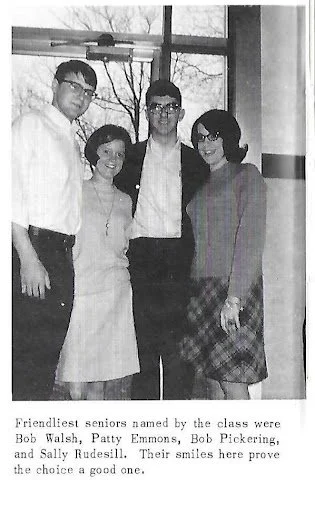
Bob was voted friendliest of our class. This was so true. He was a friend to everyone.
I remember him participating in track in high school, but no other sports. He participated in choir for one year. I don’t think it really interested him. He got too busy with other things. He was involved heavily in our Student Council. I am not certain what year this was, but he ran for President but lost to his good friend, Charlie Gore.
Bob was also on a committee to raise funds for a new teen center for our town. He and a group of teens tried to come up with ideas to raise money. Some of the ideas were actually fun things that we did. We sold light bulbs door to door! We would have several groups, divide the town, and take off each Thursday night selling those light bulbs. We ended up selling 500 BAGS of bulbs! That’s a lot of light bulbs!
Bob was well known for collecting artifacts. He and his friend, Steve Lathrop, would go to an area near Lawrenceville and search. Bob had been collecting artifacts since the 7th grade! By the time he reached high school, he had something like 350 arrowheads, 6 axes, various pendants, and a skull. Did he still have the skull? He would enter science shows in school and win! He also tutored other students. When I would say, “Gee, you are so much smarter than me. He would say, “No, I am not!”
George Justice
Retaining Bob Pickering as dean of the McFarlin Library at the University of Tulsa was one of my first actions as provost in the fall of 2022. Bob had been named interim dean before my arrival. As I got to know him and understand his energy and vision, and how he planned on building the library to serve faculty, students, and the community, I decided that keeping him on as dean for a couple of years—although it meant keeping him away from the retirement he had already begun—was in the interest of the university. I’m glad he accepted the offer.
And it turned out, of course, to be in my own personal interest to be able to see Bob multiple times per week. He was a wonderful collaborator, a repository of knowledge and wisdom—and he quickly became a good friend.
I’ll highlight two things about that friendship. In the spring of 2023 he invited me and my son Lowell, who was a junior at Booker T. Washington High School and a member of the jazz band, to a jazz concert at a local restaurant. A kind of open-mic night for jazz musicians. We sat at a table with Bob, enjoyed a meal, met some of the other regulars. And I appreciated the interest he showed in Lowell, who was new to Tulsa that year. Bob spoke with Lowell with genuine curiosity, interest, and respect.
And the other thing. Provost is a lonely job. You don’t really have any peers on campus. Bob served as a peer and mentor to me, even though technically he reported to me. When the Family Thai restaurant opened, we began to schedule pretty regular lunches, at which he’d regale me with stories of his life, including time spent in Thailand as well as in many curious corners of the country, not in the least Tulsa, Oklahoma! These lunches provided me with a rare opportunity to let my guard down and see a colleague truly as a friend. Bob lived an interesting life as a scholar, a leader, and as a writer. He had a beautiful family—I loved seeing him and Mari walk the dog as Bob walked to campus in the morning as I zipped by in my car on 6th St. And I loved meeting his amazing daughters—of whom he was so proud—at his retirement event in 2025. I wish he had been able to finish the novel he was working on, but I’m so glad to have the books he had recently published. I miss him now, and I know I’ll continue to miss him for the rest of my own days.
Tim Basta
It’s never easy meeting your partner’s parents for the first time, but one of my best memories of Bob is from my first visit to Tulsa with Evie. I was immediately made to feel accepted and welcome by all the Pickerings, and I have never experienced such warmth and connection in a family. Bob, having heard in advance that I was into music, arranged for us a tour of the iconic Church Studio in Tulsa. I was deeply touched by this gesture, because despite Bob and Mari arranging the logistics for an entire family visit, Bob went out of his way to inquire about me, and plan an activity based on my interests.
In the following years, we had more visits and video chats. I greatly enjoyed listening to stories from his adventures and accomplished career. I remember sitting by the fire with Bob at our place in Tucson, talking for hours. From the advice and books he sent, to the acceptance and warmth with which he treated me, he demonstrated what an exceptional man he was. I will miss him and remember him fondly, always.
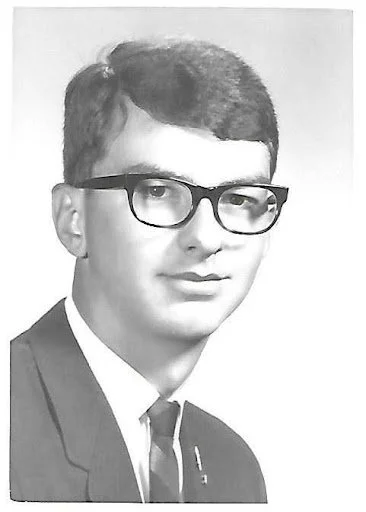
Charles Leffler
My Friend the Collector: I have known Bob Pickering for more than 65 years, growing up together in Lawrenceville, Illinois. He was the easiest friend to have, aways upbeat, quick with a smile and always inquisitive. In middle school, when bicycles were our main mode of transportation and living not too far from each other, we spent a good amount of time at each other’s house. Bob was always collecting neat things and wanting to show them off. They could be things from nature, a bird nest, a snake skin and the like, or an Indian relic or anything historical. It seemed pre-ordained that he would end up being involved in archaeology, history and museums. His tenures at the Field Museum, Buffalo Bill Center, the Gilcrease Museum and along with his academic record certainly validate this passion. To prove my point regarding the Bob’s friendly nature, I offer the following from 1968.
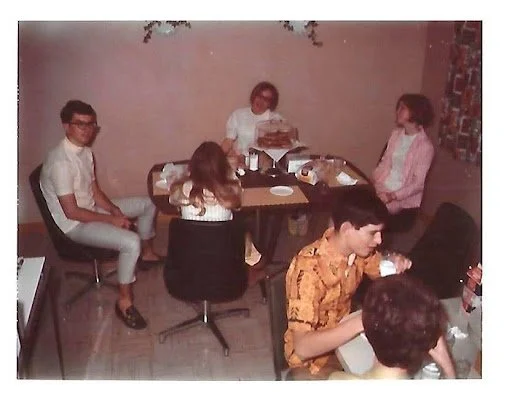
Often Together: It seemed our interests stayed mostly aligned while growing up. We were in lots of school activities together, many of them centered around our roles in the high school Student Council. In our small town, school life was the center of most things, regardless of location. Like an senior after-prom breakfast party at my house.
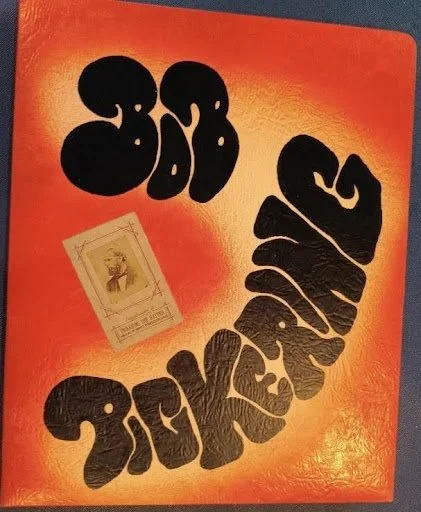
The Painted Folder: During my high school years, I would paint assignment folders for friends in the style popular in the 60’s. A couple of years ago Bob sent me this picture of his unused folder. True to his nature, he collected it rather than using it!
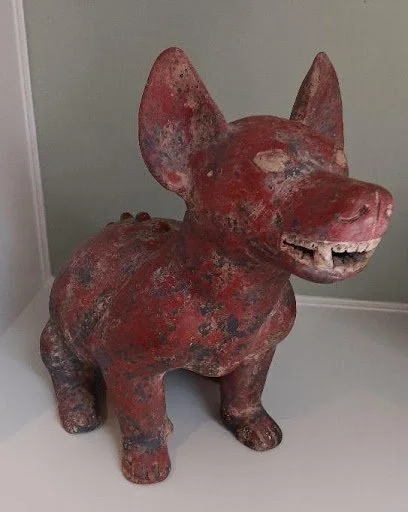
The Wedding Gift: In 1971, when my wife, Wanda, and I were married Bob gave us a replica of a Mexican dog. Although Wanda always thought it was a bit scary, it has occupied a special place in our home for almost 55 years. Bob would tell us, from time to time, he might someday borrow it back to have it CAT-scanned for research purposes…
A Friend I Will Miss: Bob’s passing is an especially hard loss. He was a friend that no matter how long went between our contacts, we could pick it back up as though it was just yesterday. Hearing about his latest book, his recent research, exchanging travel experiences, giving each other a hard time. It was like we didn’t really disconnect between those times. He couldn’t come to North Carolina or me to Oklahoma without us having a meal together. I was so glad for him when he finally retired last year. But for Bob, we all knew that he would redirect his energy to the things he loved, never really slowing down. As his friends know, Bob was special. I will miss him.
Bert Fisher
Once I learned that Bob was a big fan of BBQ, I invited him to join me often on lunchtime explorations of the Tulsa BBQ scene. Just before covid completely spoiled our plans, we signed up for a class to teach us how to become BBQ judges -- nothing like making a hobby official! Covid-induced restrictions knocked out that plan, but we continued to enjoy BBQ lunches on a frequent but irregular basis. Our conversations spanned history, art, archeology, museum programs and a good dose from time to time of TU gossip. So many good times.
On a more academic side, Bob was always ever so kind to include an invitation to us to many academic and artistic events. We especially enjoyed learning about the Library Fellows group, and we enjoyed attending the Library Fellows' events.
David Goldenberg
Coffee with Bob was always a conversation that would go into wonderful tangents. The tangents might have centered around a project thirty years ago or something that happened at TU last week. Always interesting. I learned a great deal about museums and museum life from him. I went to him in 2024 because I knew the Tulsa Historical Society needed a name change. Nobody really knew what it was. He looked me in the eye and said, "You need to tell people, in the very first word, what you are." He never took the credit, although I insisted it was his doing, that the museum changed its name to "Museum of Tulsa History." I considered him a trusted friend and colleague. I will miss his wise counsel.
Drew Henderson
I had the utmost respect for Dr. Pickering. He played a central role in me pursuing my masters degree. He served as a professor, advisor, and mentor in graduate school. Most importantly, he was a true friend! We could talk for hours about anything related to archaeology and various chapters of American history. He helped open doors for me in future career pursuits. I thank God that I was able to call him my friend. He will always be revered and honored in my household!
Jim Osborne
I did my student teaching at Lawrenceville High School and was so excited to be able to do that so close to home. I can still remember how Bob was one of those special students whom I became acquainted with quite rapidly. It was clear that we had a real mutual interest in everything pertaining to history. From that point on we continued to remain in touch and our friendship grew proportionally. Over the years it was always fun to compare notes on the new and exciting things we had either discovered or taken part in, ranging all the way from Indian and local folklore to WWII.
Bob was very instrumental in the early days of the Indiana Military Museum’s development in helping me think out and write up promotional material for letters and brochures for fundraising, etc.
The trip to Yellowstone was one of the highlights for not only me but for the other guys from Vincennes, all who met Bob for the first time – including Garry Hall, P.R. Sweeney, John Harrison, and Gus Stephens. Both P.R. and Gus are now gone as well. Of course, Bob knew the route we were taking through Yellowstone and the Custer area, etc., like the back of his hand. It was so wonderful to have him with us that week, not to mention the fun we had at the rodeo and the Buffalo Bill Museum, etc. It is one of the standout memories of a great vacation.
I remember at one point in Yellowstone there was an old buffalo lying on a knoll about 40 yards in front of us next to the road and Garry had been wanting to get a good close up photo of a buffalo. He stopped the van, grabbed his camera, and started walking towards the buffalo so Bob quickly warned Garry, “I wouldn’t do that, you don’t know how fast they can get up and charge right at you.” Garry, being a former Marine and pretty good athlete, ignored Bob’s warning until he got about 20 yards from the buffalo and the buffalo raised his head up and looked at Garry (still from a lying position), Garry came to a sudden stop, took his photo from that spot, and then backed off towards the van. think it took a minute or so for Bob’s warning to sink in, but it did, and I think all for the best of course. Needless to say, I had my camera ready to get the action of the buffalo charging Garry, if that ultimately happened, I’m sure it could have made good national TV somewhere.
Bob’s insight concerning the Little Bighorn visit was a real privilege for us, and I know you remember the occasions where we got together here in Vincennes and Lawrenceville in more recent times with the question and answer series with the Public Library and the Lawrence County Historical Society – those were fun evenings. I think you will remember, I told Bob maybe we can continue with this performance for some years to come. Little did we know.
Amber DuBoise-Shepherd
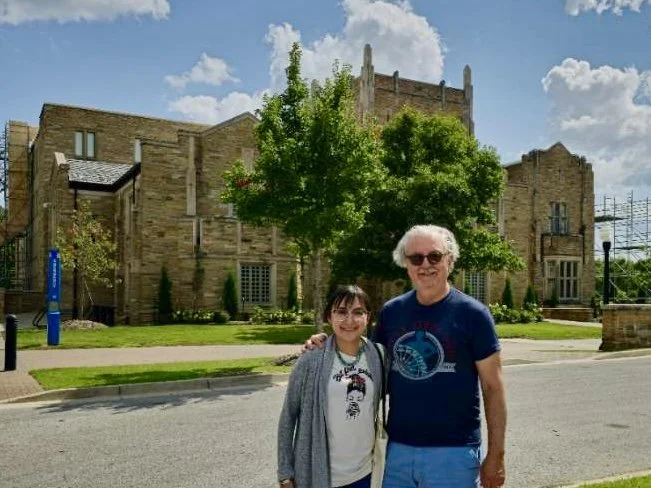
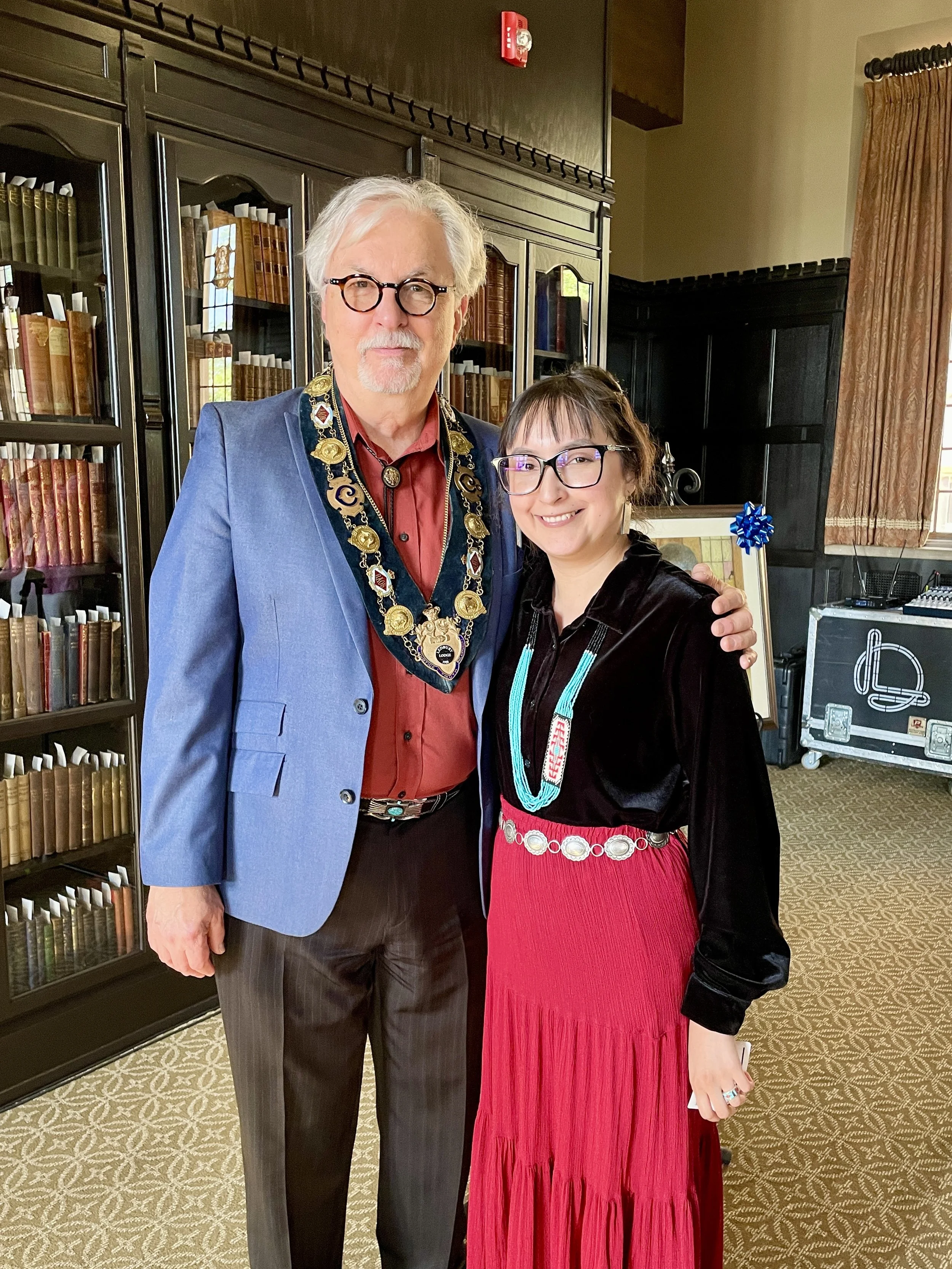
I first met Bob when I was the educator at the Mabee-Gerrer Museum of Art. We were introduced by my director Dane Pollei. As with Dane, Bob and I hit it off well as I learned he had a strong interest in Native art and culture. As a Native artist myself steeped in my ceremonial and cultural upbringing and Bob's deep academic knowledge in the subject, we had much to converse about. He invited me to assist him as the illustrator for his book "Luck is a Fortune" which was an honor for me. The book resides in my glass cabinet with my awards, and ceremonial items as it holds special value. I told Bob that I decided to begin my Master's in Art History at OU. He was very supportive, and he helped me narrow down a few ideas for my future thesis. He gifted me books that were assigned in my coursework, and I utilized them in my research papers. I only knew Bob for the last 6 years, but he was a strong influence in my career. Bob, I am saddened by the thought that you won't get to read my thesis, but in my Native culture there are a multitude of ways to communicate to send our messages up to the Milky Way where all our relatives, and friends reside. Bob spoke fondly in most conversations we had about his dear wife, children, and grandchildren. I send my prayers to his family, and other friends, and I trust Gitchi Manitou and the Holy People bring all of you comfort. Ahéhee', Ketepi, Migwetch... Your spirit is still out there among the stars.
Jill Krefft
When I first joined the library, I never imagined that Bob would become the best boss and mentor of my career. His energy was infectious, but what I valued most was his thoughtfulness and genuine care as a leader.
Before long, we had a morning routine (coffee in his office) where we’d brainstorm next steps for the library and he’d share stories and lessons from his long career. Through it all, I came to love his quirky sayings, what I called “Bob-isms.” One of my favorites was when he grew excited about a new project or idea he would say, “My devious plan,” twirling an imaginary handlebar mustache. And I’ll never forget the day he received his Royal Order of the Buffalo Chain of Office. He wore it proudly during our leadership team meeting, smiling from ear to ear. Medals and buffaloes, there really couldn’t be a better combination for Bob.
Nothing seemed impossible to him. Even in retirement, he continued to brainstorm and pursue new ideas with the same drive and commitment, staying fully engaged in his newest project. His love of the American West was a through line in so much of his work. He taught me to follow my passions with integrity and with purpose and even after he retired (the second time), he remained a steady presence and mentor.
The impact Bob leaves on me and on the library will be felt for years to come.
Philip Viles
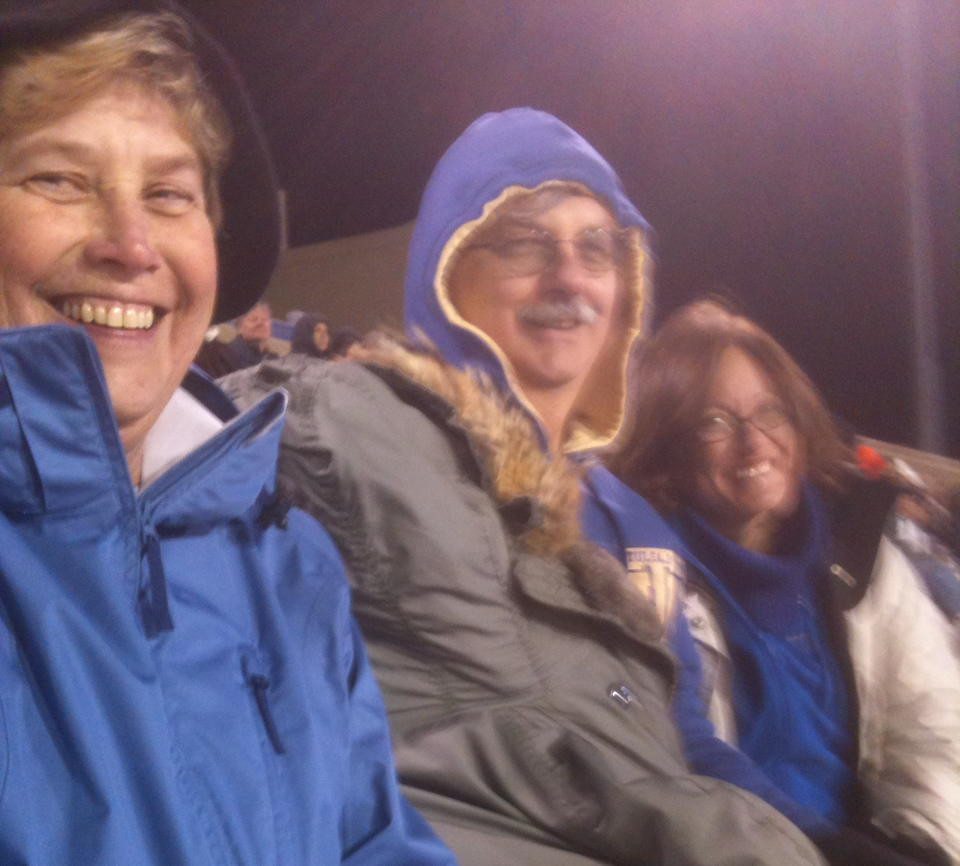
Cinda and I reconnected with Bob and Mari a few years ago at TU's Thanks for Giving Dinner. As I recall the story, we first met them in Cody in June 2009 when I was with the U.S. Department of the Interior. Later, when I had retired and returned to join Cinda in Tulsa, Jim Ronda asked Cinda to talk with Bob about his hobbies and to see if Tulsa would be a fit for him. They talked and I'm glad he and Mari moved to Tulsa. I took him to a Tulsa Drillers game in 2025, attended his retirement ceremony, heard him speak at Trinity Woods, and always enjoyed his company. May his memory be a blessing.
Mike and Barb Nelson
We met Bob in Tulsa, likely first at the Gilcrease. We met Marianne, too, and Barb introduced her to the Assistance League, a notable Tulsa non-profit.
None of us were Tulsa natives, but we enjoyed exploring the city and area together. Every time we were together we were sure to learn something and reflecte on the experience with a smile. Looking back, it was likely more of a laugh.
For a variety of reasons, we became fast friends. No matter what we did (football games, dining out, a special view of something new at the Gilcrease, the symphony, buffalo viewing, flea markets, Route 66 treasures and more) with Bob (and Marianne), we knew we had been hit with a positive endorphin inducing experience.
Too soon gone, but thanks for the wonderful memories Bob.
Bob Spoo
Bob and I became friends almost as soon as he arrived at the University of Tulsa. We discovered that we shared a mission to improve understanding of archives and archival research, and I watched with admiration as he founded and built TU's Museum Science and Management master’s degree program. At the time, it was one of the only programs around that incorporated teaching about intellectual property--critical for those who work in museums and archives--and I was happy to offer my background as an IP attorney to Bob's mission. We had fun making a number of teaching videos called "The Rights Stuff" for the training of museum folks. Bob was always kind and interesting, always excited and busy with some new project, and his knowledge of anthropology, archaeology, and Western subjects was immense. He was an important force for good at TU long before he became its Dean of the Library in 2023. It was a joy to host him and Marianne at our Sunday afternoon Packer-game viewings in Tulsa, especially when my team (the Packers) played Bob's team (the Bears). I spoke with Bob on the phone no more than six weeks before he passed, and he was full of projects and plans. He was a gentle, strong, learned, joy-filled person, and my spouse Marjorie and I will miss him greatly. We offer our condolences to Marianne and the Pickering family.
Sean Stanford
I first met Bob right after we opened the bookstore. He was very positive and encouraging and really seemed to want it to do well. He mentioned he had some books that he needed to start downsizing and invited me to have coffee at TU and look at his collection and discuss. Eventually we got through all the books he wanted to go through at that time, but we kept getting coffee together. It became routine. We'd discuss books, past jobs, current jobs, jobs we never want to do. Bob would tell me stories of his time in the field working as a forensic anthropologist or handling rare pieces at the Buffalo Bill museum in Cody or at Gilcrease. We'd tell jokes and laugh. It was never a dull conversation. Eventually we started to discuss more personal things (or I did) and Bob would sometimes offer advice or maybe suggest another way of looking at an issue, but no matter what, he would always listen. Bob was a good coffee buddy, but he became an even better friend. I'll miss him.
Joe Smith
Bob and I were buddies since the 6th grade. He and I would hunt for arrowheads and indigenous people's artifacts together. We even went on a dig in what we thought might be a burial mound located east of town. He was always doing much more research, reading and gaining of actual knowledge than me. I always told him that he was interested in the history and I loved the objects. So he became a scientist, author and museum director and I became an artist/sculptor and teacher. His friendship meant very much to me, even though we saw each other only a few times since high school. He gave me a sense of solidity in a shifting world. His calm assuredness was rare and he always had that quality. I am so very sorry to hear of his death and his wife and daughter's loss of him. Please accept my condolences and heartfelt sadness from and old friend.
Steve Roth
Bob was truly a great guy to know. He had two wonderful qualities. He was intellectual, taking interest in a variety of subjects and always expanding his knowledge. More importantly, he was someone who got along with everyone and helped wherever he could. These qualities made him successful in his career and his life. I am happy that he was able to pursue his passions and watch his family grow.
Henry Moy
“Henry, meet Bob Pickering. He just joined the department...” my former colleague said, as he introduced us. This was at the Field Museum of Natural History in Chicago, where Bob had just joined its Department of Education. I had been a project volunteer in the Anthropology Department for several years, leaving to complete my academic studies. I had returned to Chicago to visit family, friends and former colleagues. My visit to the Field was brief, one of those that rarely warrant lasting memories, but I did remember Bob! My initial impression was of an amiable, friendly fellow, interested in a lot of things, and conversant about nearly every topic that came up. We had many common interests and agreed to keep in touch, especially if we found “wonderful things” (as exclaimed by Howard Carter of King Tut fame). Over 40 years we connected over many curious objects. He enlightened me about a recent sculpture acquisition (“Well, it was certainly inspired by ancient West Mexican cultures …” ) and I got to later provide a comment about the “wonderful, tropical environment” a certain basket was created in, but had probably never been in the Pacific Northwest!
We continued to meet on and off as he went from Chicago to Denver, then to Cody and finally Tulsa. (I beat him to Oklahoma, living in the city of Idabel and working at its Museum of the Red River). Throughout the years he was a great friend to me and the institutions I worked in. He was an attentive listener and provided valuable advice, or at least good-humored commentary!
He occasionally expressed frustration with his own situations as teacher, curator, and administrator. But even at his “worst” he was an example of strength and fortitude, bringing his considerable intellect and expertise [tempered by broad experience] to any problem or challenge. He never lost that “twinkle” in his eyes.
In the past few years he presented at the Museum of the Red River several times. The narrative and artistic history of the American Bison, European and US peace medals, the lore of eclipses through time and across cultures, and even the plight of overeager collectors, were but a few topics he brought to our attention. His talks were always appreciated and well-received. We in Idabel and at the Museum will be forever grateful for his generous sharing.
Our thoughts are with Marianne, Evie, and Kate.
Diana Folsom
Bob Pickering was one of the first people I met during my in-person job interview for the Gilcrease Museum thirteen years ago. I didn’t realize until I’d been there a while that he had been working hard behind the scenes to raise funds for the new Digital Curation program to help it get off the ground. As a result, we interacted frequently during those first few years.
I was never quite sure of his official title, but to me, he felt equivalent to a Deputy Director—deeply involved with every single program. If that wasn’t enough, he also served as the Director of the Museum Science Management (MSM) program at the University of Tulsa, where he advised graduate students and taught classes. Beyond academia, he possessed deep museum education and exhibition skills that he brought to bear frequently. This large range of responsibilities could easily add up to four distinct full-time jobs and create a highly stressed individual. But not Bob. He always managed to keep a trademark twinkle in his eye, welcoming humor at least once in every conversation. Above all, Bob was genuinely interested in all areas of museum work. He truly cared.
He was a remarkably strong writer and a wonderful conversationalist, and we often engaged in good-natured debates. He gently showed me that some of my earlier, high-minded ideas about "anthropology as art" might be a bit limited and one-sided—he certainly gave me a lot to ponder! In addition, he played a vital role in weaving a scholar’s perspective into our first successful government grant proposal. He did it in a way that beautifully supported our community-based technology, ultimately helping to expand the public's understanding of our collections. Not all scholars are so open to ideas outside their own domain.
Perhaps his greatest contribution to my professional life, however, was the stream of graduate assistants he brought into my department. At first, I wondered how much we could achieve relying primarily on graduate students. I soon learned that Bob had an exceptional eye for talent and work ethic. These amazing students learned quickly and deeply shared our dream of connecting people around the world through art and culture. They participated enthusiastically in numerous large, complex projects to build an important collections website. Today, I am proud to see the future blossoming boldly under the leadership of Bob’s former students—such as Joseph Carriger and Zachary Qualls at the Gilcrease Museum—and to hear about the work his alumni are doing across the country. It gives me great hope.
In addition to being an expansive thinker, Bob was a beautifully balanced person who was dedicated to his family. Once Bob and Marianne moved nearby, I saw them walking in the park nearly every day. Together, they attended countless donor events and work parties; she supported all that he did while capably leading another important organization herself. Bob often spoke proudly of his daughters, his latest travels, and the progress of his new books. And he cooked! I was fortunate to be the recipient of his delicious soups, which truly nourished both body and soul. Reflecting on these memories, I realize just how much Marianne was the ideal partner and love of his life. As a couple, they radiated an enthusiasm for ideas and people, bound by a love for one another that was grounded in kindness. Bob lived a wonderful life—one filled with profound meaning and purpose.
Chuck Preston
Bob and I shared so much during our long association at Denver Museum of Natural History (Nature and Science) and Buffalo Bill Historical Center (Center of the West). We traveled those rich, "gravel roads" between 1990 and 2008 through the best of times and some challenging ones. Bob was a valued colleague with an incredibly versatile and active intellect and a passion for lifelong learning and teaching. My favorite memory, however, is when Bob, Mari, and the girls came to our home in the mountains near Yellowstone to cut Christmas trees and share "mushy" sugar cookies. Penny and I will miss Bob but are enriched by these memories forever. Our warm condolences and wishes for Mari, Katie, and Evie to cherish their memories of Bob.
Dave Kennedy
I was in Bozeman, Montana, putting my masters in history to good use as a computer programmer. My wife, Heidi, was working at the Museum of the Rockies. She was reading the AAM Aviso (back when they still printed it on paper) when she saw a job opening at the BBHC. The job opening was for curator at the Cody Firearms Museum.
I started as the curator. Over six years, we shared an office suite. During that time, we shared stories, commiserated over the idiosyncrasies of board members, and rolled our eyes over the ins and outs of gun guys.
He taught me a number of good lessons. Foremost among those was an understanding of the "bully pulpit" of a curator. Specifically, he was referring to the CFM curator. I learned over time that every curator has this status in some crowds.
I took a few trips with him over our time in Cody. The last was my first "real" trip to Oklahoma. We were headed to Idabel - FAR southeast Oklahoma - for an event with his friend Henry Moy. While driving across rural Oklahoma, he helped me start on the realization that I needed to move to the next stop on my career path. Six months later, I moved to Oklahoma as an employee of the Oklahoma Historical Society.
Fifteen years on from leaving Cody, I still think about lessons I learned from Bob and I have been able to take on his role to help shape young museum professionals who are in my region.
It's a good feeling.
Miss you, Bob.
Brad Carson
I first met Bob in the first few days of becoming President of the University of Tulsa. It was blazing hot, and I was walking across campus. Students hadn't returned, and, as we were still emerging from Covid, there weren't even many staff around. It was on Dietler Commons when I ran into Bob, and, figuring he must work at TU, I introduced myself. He told me that he was a retired anthropology professor who still had a small office on campus. He had retired in 2019 (IIRC) when a number of faculty had also left. We talked for 5 minutes or so, during which he told me of his time in Wyoming at a museum, his great interest in Gilcrease Museum, and his willingness to help at TU. It wasn't long after that the Provost and I asked Bob to come out of retirement to be Dean of McFarlin Library. In that role, he did an amazing job. He was a patient but demanding leader who set up the library for years to come. He was also a great friend and advisor. We had meeting every week or two. We talked library business, but also a lot about his experiences in the American West, the future of anthropology as a discipline, his old colleagues, and much more. I treasured these times with Bob, who often showed up in a vest and bolo tie. He loved TU, and he was a great leader for the school. We will miss him.